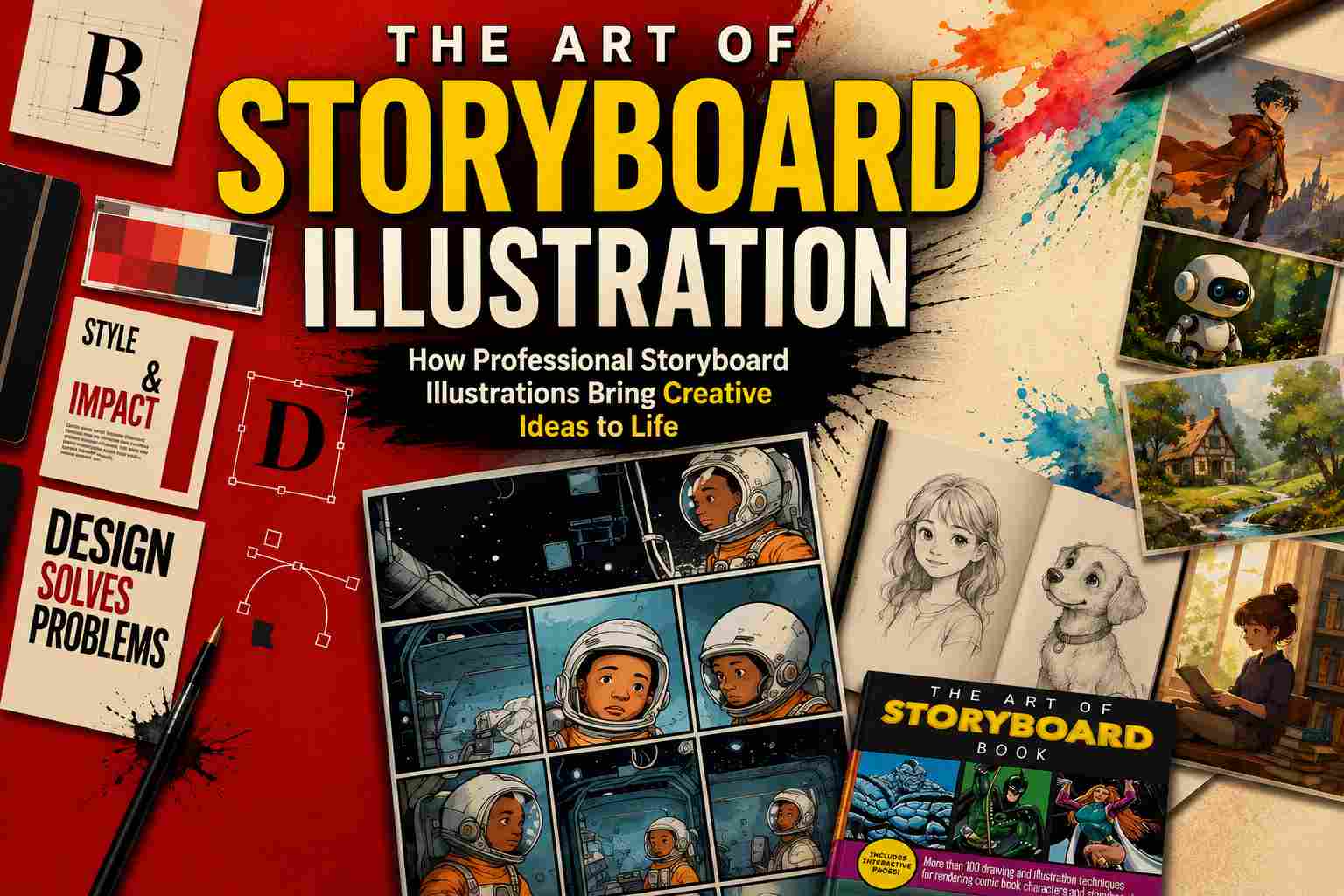
How Professional Storyboard Illustrations Bring Creative Ideas to Life
You know exactly what you want the illustration to look like. The character’s expression, the way a scene unfolds, and how the page should feel when someone flips through it. It’s all clear in your head. Then you try to describe it to an illustrator, and somewhere between your words and their sketchpad, half of it gets lost.
This isn’t a communication failure on either side. Visual ideas rarely translate cleanly into spoken or written instructions, no matter how detailed the brief is. What actually works is seeing a rough version of the idea before any real time goes into finished art.
That’s the entire point of professional storyboard illustrations. They give both the client and the illustrator something to look at and react to early, when changes still take minutes instead of days. It’s less about drawing and more about making sure everyone is picturing the same thing before the real work starts.
Add Life To Your Creative Ideas With Professional Storyboard Illustrations
Every illustrator has had a project where the client says “yes, that’s exactly it” only after the third round of revisions on finished art. By then, the changes are painful. A color palette that took days to render has to be redone. A pose that looked fine on paper suddenly feels wrong once it’s fully rendered. That’s the gap storyboard illustrations are built to close.
A shared reference point, not a guessing game
At this stage, nothing is precious yet. Lines are loose, details are missing on purpose, and that’s exactly the point. It gives the client something concrete to respond to, rather than trying to describe a feeling in words. Sequencing, pacing, where the eye should land first on a page or panel, all of it gets worked out here, while it’s still cheap to change.
Where the real decisions happen
Layout choices that seem small, like how much space a character takes up in a frame or where a scene cuts to the next one, shape how the entire piece reads later. Professional storyboard illustrations catch those decisions early, before an artist has spent hours polishing something that needed to move three inches to the left. It’s less glamorous than final art, but it’s where most of the actual problem-solving happens.
Where Projects Usually Go Wrong Without It
Skip the sketch stage and the mistakes don’t disappear. They just show up later, when they’re harder to fix. A pose that felt right in your head might look stiff once it’s fully rendered. A layout that seemed balanced could end up crowding the one detail that mattered most. None of this is obvious until the art is nearly done.
What tends to go unnoticed until it’s too late:
- Expressions that don’t match the tone of the scene
- Panels or pages that feel rushed or oddly paced
- Characters positioned in ways that pull focus from the actual subject
Catching these at the sketch stage takes minutes. Catching them after final rendering means reworking shading, color, and detail that took hours to get right. That’s the real cost of skipping ahead.
This is exactly why professional storyboard illustrations exist as a separate step rather than a formality. They’re the cheapest place to be wrong, so the final piece doesn’t have to carry that risk.
Picture Books and Animal Stories Need This Most
Picture books live and die by pacing. A child turns each page expecting something to shift, a new expression, a new angle, a small surprise that keeps them reading. Get that rhythm wrong and even beautiful artwork falls flat.
Why every spread has to earn its place
This is where planning page by page matters most. Children’s book illustration projects usually involve dozens of pages that all need to connect visually while still building toward that page-turn moment kids look forward to. Working this out in rough sketches first means the pacing can be tested and adjusted before a single page is fully painted.
Keeping characters believable across every page
Animal book illustration comes with its own version of this challenge. Animals need to hold consistent proportions, posture, and personality whether they’re standing still or mid-motion, and that consistency is much easier to lock down at the sketch stage than to fix later across twenty finished pages.
Where the groundwork actually happens
This is exactly the kind of project where professional storyboard illustrations carry real weight. Long before final colors and textures are added, the sketches determine how a story reads visually from the first page to the last. Get that part right, and the finished book feels like it was always meant to look that way.
Character Design Services Begin Before the Final Look
A character isn’t just one drawing. It’s dozens of small decisions that all have to agree with each other: how they stand when they’re angry, how their faces read from a distance. Whether their proportions still make sense in a full-body shot versus a close-up. None of that gets figured out in a single final piece.
How a character actually gets built, in order
- Loose sketches test a handful of expressions against the character’s personality
- Poses are tried from different angles to see what holds up
- Proportions get adjusted until they feel consistent, not just correct in one pose
- Only once these hold steady does detailed rendering begin
This is the stage where most character design services do their real work, long before color or shading enters the picture. It’s less about drawing a finished character and more about stress-testing an idea until it survives contact with different scenes and moods.
Professional storyboard illustrations play the same role here as they do everywhere else in this process. They let a character be wrong in a dozen small ways early, so the final version doesn’t have to guess.
Comic Panels Are Storyboards With Extra Steps
A comic page is really a sequence of decisions about timing. Which moment gets a full panel and which one gets skipped entirely? How long should a reader’s eye linger before moving to the next beat? That timing is worked out long before any inking happens.
Pacing a scene before it’s drawn
Comic book illustration depends on this groundwork more than most people realize. A fight scene needs quick, tight panels that push the eye forward. A quiet moment between two characters needs more space to breathe. Getting that balance wrong doesn’t just look off. It changes how the story actually feels to read.
Testing the reveal before it’s final
The panel where everything changes, the twist, the reveal, the gut-punch moment, usually goes through several rough versions first. Artists test different angles and panel sizes to see which one actually lands before committing to final linework.
At its core, this is professional storyboard illustrations doing exactly what they’re meant to do, just applied panel by panel instead of page by page. The sequence is proven out in rough form first, so the finished art only has to focus on execution, not on whether the story even works visually.
How Fashion Illustrations Plan a Collection Before the Details
A fashion collection isn’t a single drawing. It’s a visual story told across multiple pieces that need to feel like they belong together. That story gets worked out long before fabric texture, stitching, or fine detail enter the picture.
Starting with shape, not detail
Fashion illustrations in Canada typically begin with loose figure and silhouette sketches. At this stage, the focus stays on proportion and movement, how a garment falls, how a silhouette reads from across a room, whether a lineup of looks flows well together. Fine detail would only get in the way this early.
Building a collection that holds together
Once the silhouettes feel right, the sketches start showing how individual pieces relate to each other across a full collection. A structured blazer next to a flowing dress needs to feel intentional, not random, and that relationship is far easier to adjust in rough form than after garments are fully rendered.
This is where professional storyboard illustrations show their range. The same early-stage thinking that shapes a comic panel or a picture book page works just as well for planning how a fashion collection should look and move as a whole, before a single detailed garment is drawn.
What Actually Matters When You’re Choosing an Illustrator
A polished portfolio tells you an illustrator can finish strong. It doesn’t tell you how they think through a project before the finished piece exists. That part matters just as much, especially if the work involves multiple pages, panels, or characters that need to stay consistent.
Ask to see the process, not just the results
Most illustrators who take this stage seriously are happy to show rough sketches from past projects. If someone only has final art to share, it’s worth asking directly how they usually plan a project before rendering begins.
What separates a good fit from a rushed one
| What to look for | Why it matters |
| Willingness to show rough sketches | Shows they treat planning as real work, not a skippable step |
| Clear explanation of their process | Signals fewer surprises and revisions later |
| Questions asked about your project upfront | Means they’re planning around your idea, not a generic template |
Illustrators who lean on professional storyboard illustrations as a standard part of their process tend to catch problems early and explain their thinking clearly along the way. That’s usually a better sign than a portfolio full of finished pieces with no visible process behind them.
How Much Time and Input This Stage Actually Takes
This part usually moves faster than people expect. Rough sketches don’t take days to produce, which is exactly why they’re useful for testing ideas before committing to final art. Canadian children book illustration is something that demands tons of raw attempts before you can finalize something
What a typical timeline looks like
- First rough sketches: usually a few days, depending on project size
- Feedback rounds: most projects go through two to three rounds before moving to final art
- Client input needed: light but consistent, quick reactions to rough sketches matter more than long written notes
Why does this stage move quickly on purpose
Sketches are fast to produce because they’re meant to be revised without hesitation. Nobody’s precious about a rough drawing the way they might be about a finished piece, which is exactly what keeps this stage efficient instead of dragging out the project.
Illustrators who build this step properly into their process usually move through it faster than clients expect, not slower. That’s often the part that surprises people most once they’ve been through it.
A Few Things Worth Clearing Up
What are storyboard illustrations used for?
They’re rough sketches used to plan pacing, layout, and sequencing before final artwork begins, helping illustrators and clients agree on the visual direction early.
Do children’s book illustrators always use storyboards first?
Most do, especially for picture books, since page-to-page pacing and character consistency are much easier to adjust in sketch form than in finished art.
How is this different for comics versus fashion illustration?
Comics use it to pace panels and reveals, while fashion illustration uses it to plan silhouettes and how pieces in a collection relate to each other. The purpose stays the same. Only the details being tested change.
The Part That Makes the Rest Possible
Whether it’s a picture book, a comic page, a character, or a fashion collection, the pattern stays the same. The best final work almost always started as something rough, unfinished, and open to change. That’s not a limitation. It’s what makes the final version feel right, not just close enough.
Professional storyboard illustrations aren’t a formality tacked onto the start of a project. They’re where the actual thinking happens, quietly, before anyone sees the polished version. Skip that part, and you’re hoping the final piece works. Do it properly, and you already know it will, long before the last line is drawn.

Emily is a professional and creative strategist behind BookIllustrator.ca, a leading illustration agency dedicated to delivering premium book illustration services in Canada and internationally. With a strong foundation in storytelling and visual communication, she works closely with expert book illustrators to transform manuscripts into visually compelling, market-ready publications.