Graphic Design vs Illustration: They’re Not the Same Thing
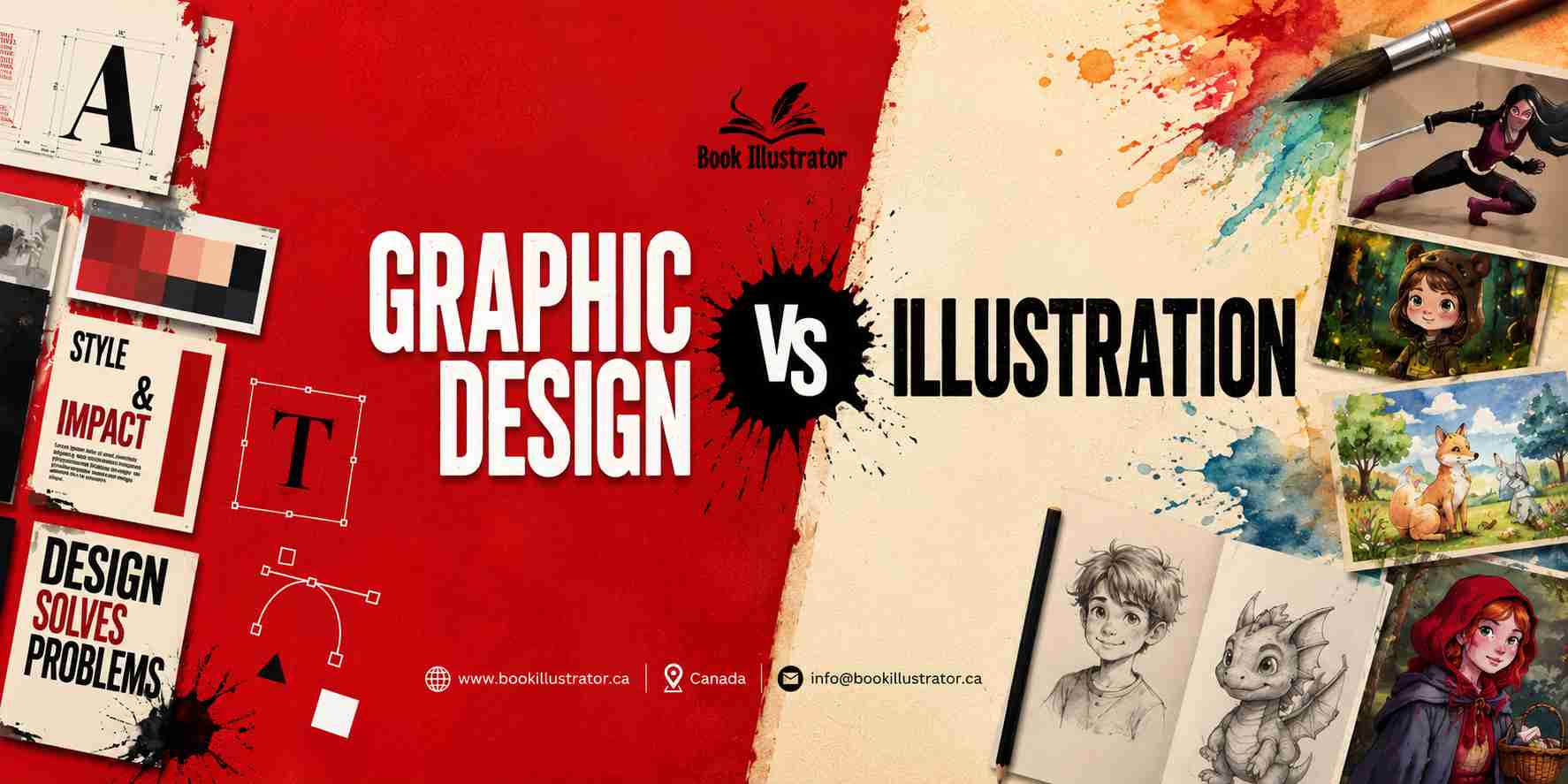
Most people use these two terms as if they mean the same thing. And it makes sense, both are visual, both are creative, and both often use the same tools. So the confusion is pretty common.
But graphic design and illustration design are two different disciplines. They have different goals, different processes, and solve different kinds of problems. Mixing them up, especially on a project like a book, a character, or a campaign, can send the whole thing in the wrong direction.
The core difference is simple: graphic design is built to communicate. Illustration design is built to tell a story.
This blog breaks down exactly what sets them apart, and which one your project actually needs.
What Is Graphic Design?
Graphic design is essentially how businesses talk without using words.
It pulls together images, text, and color to communicate a message, but not just any message. The goal is always to get someone to do something. Click, buy, sign up, trust a brand. That’s the engine running behind every design decision.
It lives in two places. Anything physical, a poster, a business card, product packaging, a billboard, that’s print design. Anything on a screen, a website, an app, a social media post, an animated ad, that’s digital design. Some designers work in both. Most specialize in one.
A graphic designer is basically answering one question: how do I get this message across as clearly as possible?
The tools most graphic designers use daily are things like Adobe Illustrator and InDesign. But the tools are honestly the easy part. The harder part is understanding what a brand needs to say and figuring out the clearest, most visual way to say it.
The field itself is pretty broad. Graphic design can mean a lot of different things depending on the project:
- Web design the visual layout and experience behind a website
- Brand identity logos, color systems, and fonts that make a business recognizable
- Packaging design how a product looks sitting on a shelf
- Social media graphics on-brand visuals built for feeds and stories
- Motion graphics animated content for digital ads or video
Their work lives in logos, ads, websites, packaging, social media posts, anywhere a brand needs to show up and say something without confusing people.
Think of it less like art and more like a very well-designed conversation.
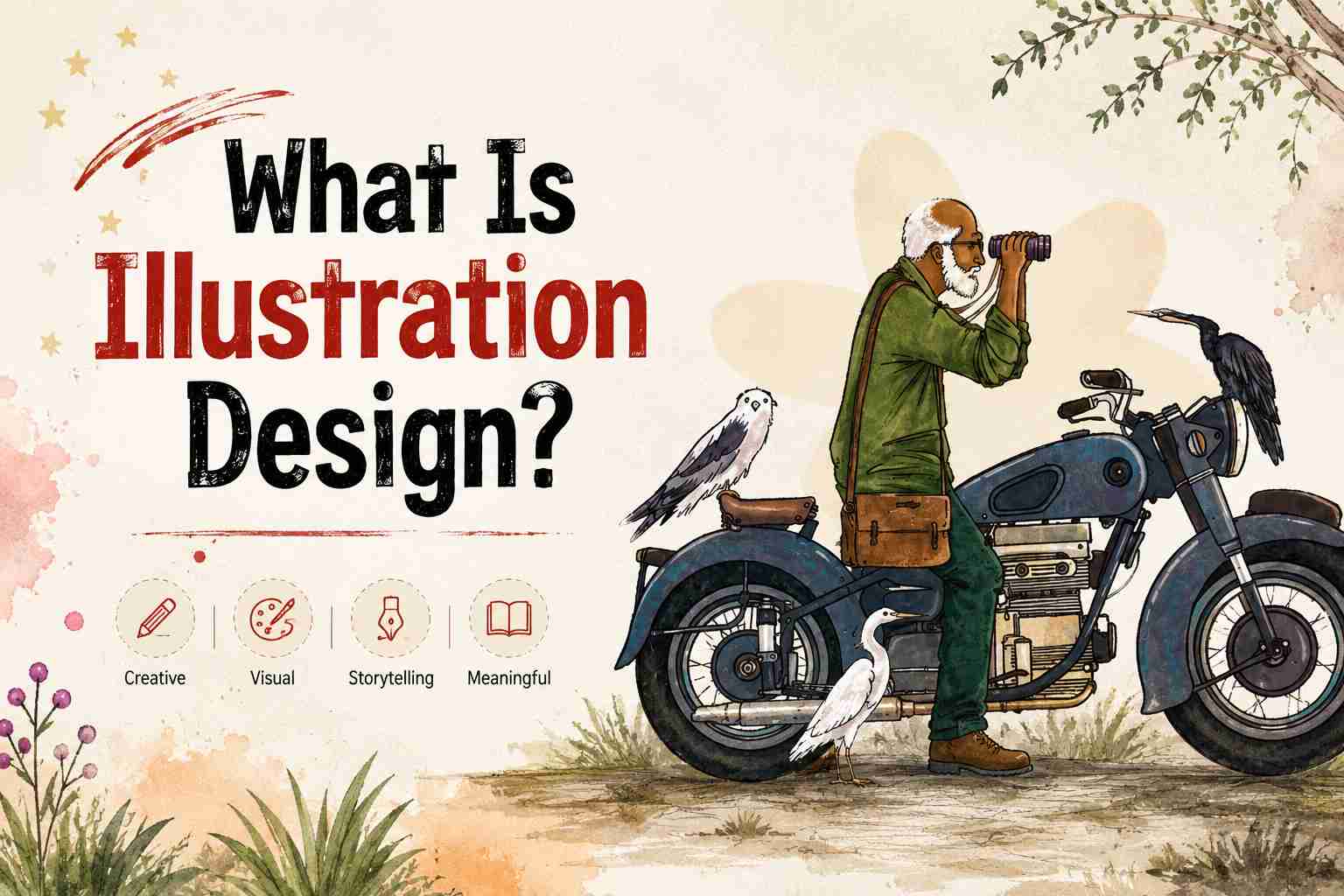
A book Illustration design or any other illustration is about telling a story. It’s the art of creating images that make people feel something, not just understand something. Where graphic design organizes, illustration breathes life into things.
An illustrator isn’t solving a communication puzzle. They’re building a world. A character. A mood. Something that pulls you in and makes you stay.
You’ll find illustration design in children’s books, editorial art, comic panels, brand characters, and book covers, anywhere emotion and storytelling matter more than structure.
Every illustrator has their own voice. Their own style. You can look at a piece of illustration and often tell exactly who made it because it carries a personality that’s impossible to fake.
That’s what makes illustration design its own craft entirely. Not just visuals, but the Vision.
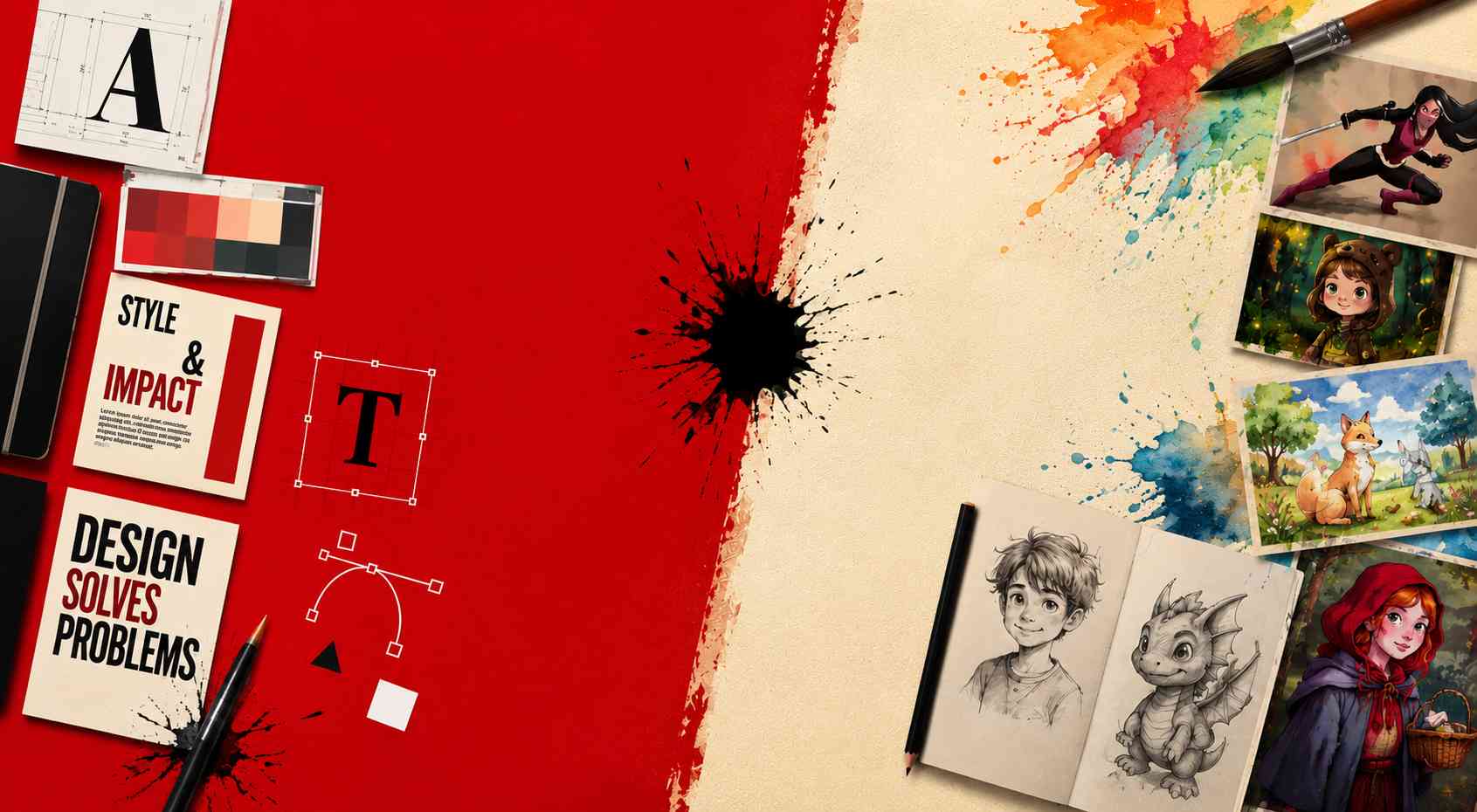
Differences Between Graphic Design and Illustration Design
Both are visual. Both are creative. Both use similar tools. But the moment you look at why they exist and where they show up, the difference becomes pretty easy to see.
Purpose is the biggest one. Graphic design is built to communicate a message and get people to act. A sale banner, a logo, a product label, every element has a specific job. Illustration design is different. It’s built to express something. A character in a children’s book isn’t trying to sell you anything. It’s trying to make a child feel safe, curious, and excited. One is a function, and the other is a feeling.
Where they show up is different too. Graphic design lives inside brands, logos, websites, packaging, ads, and social media posts. Illustration design lives inside stories, books, editorial art, and character design, as well as campaigns that need a human touch. Think about a coffee shop. The logo on the storefront? Graphic design. The little illustrated character drawn on their paper cup with a warm smile? That’s an illustration. Same brand, two different disciplines.
The process behind each is also pretty different. A graphic designer usually starts with a brief. There’s a brand guideline, a target audience, and a clear message. The work is guided by rules, fonts, colors, and spacing, and it has to stay consistent across everything. An illustrator starts with a concept or a story. The process is more open, sketching, exploring, and developing a visual world. There’s no strict rulebook. The illustrator’s personal style is actually part of what makes the work valuable.
And that’s the last big difference — style. Graphic designers often work within someone else’s visual identity. Their personal taste steps back so the brand can step forward. Illustrators are usually hired because of their personal style. A publisher picks an illustrator based on how their art looks and feels. That individual voice is the whole point.
| Graphic Design | Illustration Design | |
| Goal | Communicate & drive action | Storytelling & emotion |
| Found in | Logos, ads, websites, packaging | Books, characters, editorial art |
| Process | Brief-driven, structured | Concept-driven, exploratory |
| Style | Follows brand guidelines | Personal style is the value |
| Core skill | Layout, typography, hierarchy | Drawing, composition, expression |
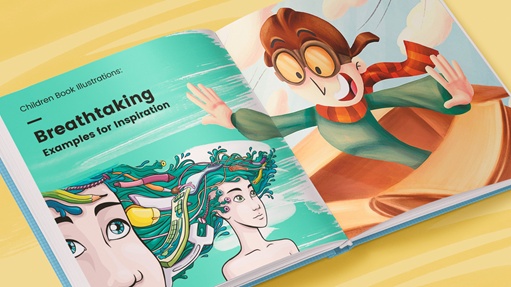
Book illustration is more than drawing pictures for a book.
It is about building a visual world alongside the written one. Every decision about what a place looks like, what emotion a character carries, what the atmosphere feels like on a difficult page lives in the illustrator’s hands, not the author’s. What makes book illustration genuinely different is continuity. A character on page 3 has to feel like the same person on page 28, across every mood and every scene. Good book illustration doesn’t repeat what the words say. It shows what the words can’t.
Good book illustration doesn’t repeat what the words say. It shows what the words can’t say. That’s the real craft of it. When it comes to children’s book illustration specifically, the standard shifts even further.
Children’s book illustration takes that responsibility even further. The reader may not have fully read yet, so the illustration often carries the entire story on its own. Emotion has to land immediately, not just “happy” but visibly, unmistakably happy. Color does quiet storytelling, too: warm tones feel safe, cooler ones bring weight. And since children want to see themselves in the stories they read, character design in children’s books now carries real cultural responsibility, not just aesthetically, but in how genuine and thoughtful the representation actually feels.
FAQs
Can a graphic designer also be an illustrator?
Yes, some professionals do both. But graphic design and illustration are different skill sets. Always check the portfolio before hiring, make sure their work matches what your project actually needs.
What type of illustration is used in children’s books?
Children’s book illustration is mostly character-driven artwork, created digitally or by hand. It focuses on clear emotions, consistent characters, and color that support the story from page to page.
How is character illustration different from regular illustration?
Regular illustration is often a single, standalone image. Character illustration breakdown means designing a character that stays visually consistent across every page, scene, and expression throughout an entire book.
So Which One Do You Actually Need?
Think about what your project needs at its core.
If you’re building a brand, running ads, or putting together a website, that’s graphic design. If you’re telling a story, creating a book, or developing a character, that’s illustration.
And if you’re still unsure, ask yourself one simple question: do I need people to understand something, or do I need them to feel something?
That answer will point you in the right direction.
And if you’re looking for illustration work, whether it’s a children’s book, a character, or something editorial, take your time finding the right illustrator. Look at their existing work and notice how it makes you feel. If it pulls you in, it’ll do the same for your audience.
That’s really what good illustration does. It doesn’t announce itself. It just makes you stop, look, and stay a little longer than you planned.

Emily is a professional and creative strategist behind BookIllustrator.ca, a leading illustration agency dedicated to delivering premium book illustration services in Canada and internationally. With a strong foundation in storytelling and visual communication, she works closely with expert book illustrators to transform manuscripts into visually compelling, market-ready publications.